Tenerife
Written on 28th February, 2024
A short family break for some winter sun finds us in Tenerife, but I’m all too happy to go along with the idea because I’ve heard there are some great plants to be found if you can tear yourself away from the sun lounger or in my case, extract yourself from family duties for a couple of hours.
Thanks to its extreme microclimates, volcanic soils, and total geographic isolation, Tenerife’s flora is a fascinating living botanical museum with hundreds of unique, endemic species found nowhere else on Earth.
As I soon find out, ‘unique’ hardly does the freakish nature of some of the plants justice.
Either side of the motorways, which meander through long since solidified lava flows, plants have somehow managed to get a footing in the seemingly barren landscape, and thrive. There are drift upon drift of aeonium canariense.
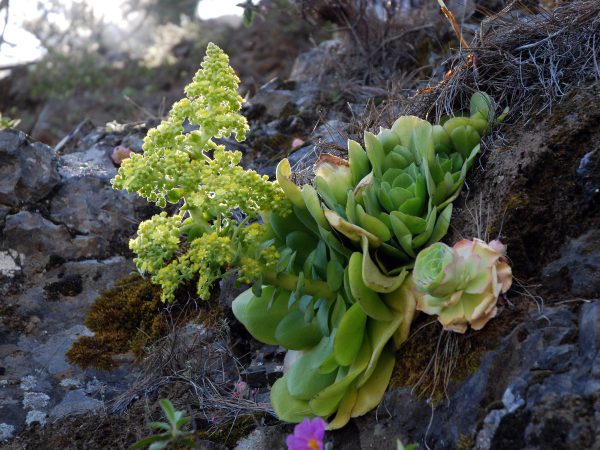
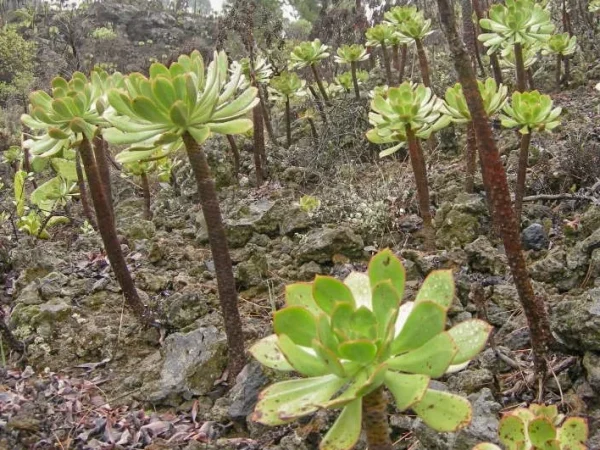
I’m familiar with the ever-popular aeonium arboreum ‘Zwartkop’ and have long coveted one, but I don’t have space to bring it indoors when the temperature drops below 5 degrees. In fact there’s one on a roof terrace on my street. I’ll keep an eye on where it goes during the winter (or how well it copes outside when it gets cold).
A smaller succulent that I do have growing (albeit permanently inside, on a sun drenched shelf in my bathroom) is euphorbia trigona, or the African milk tree. I rescued it from the discounted shelf at a nursery and it seems to have recovered in dreadful soil that I wouldn’t trouble my compost heap with, and barely any water. The euphorbia that I find on Tenerife, growing in similar conditions to the aeonium is e. canariensis.
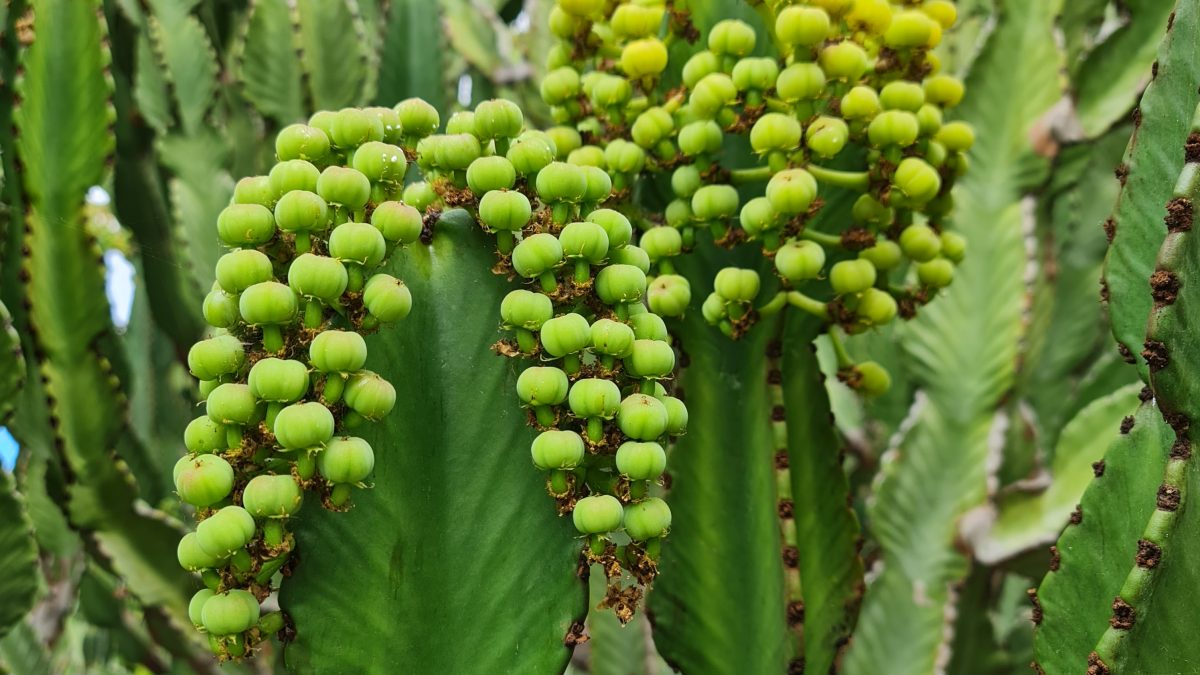
Euphorbias really are the most diverse genus; In the UK I regularly plant the likes of e. charachias wulfenii, palustris and mellifera, all with the same toxic milky sap but a herbaceous like growth, and on Crete a few years ago I came across the highly distinctive e. acanthothamnos, the Greek spiny spurge with its honeycomb skeleton structure of branches, and prostrate cliff hugging habit, quite unlike any of the aforementioned euphorbias. Only by getting close up and pulling a tiny leaf off to see the white sap could I have known that it was the same genus. Here in Tenerife, the e.canariensis combine well with the introduced agave americana, growing by the water’s edge on the northern shores of the island.
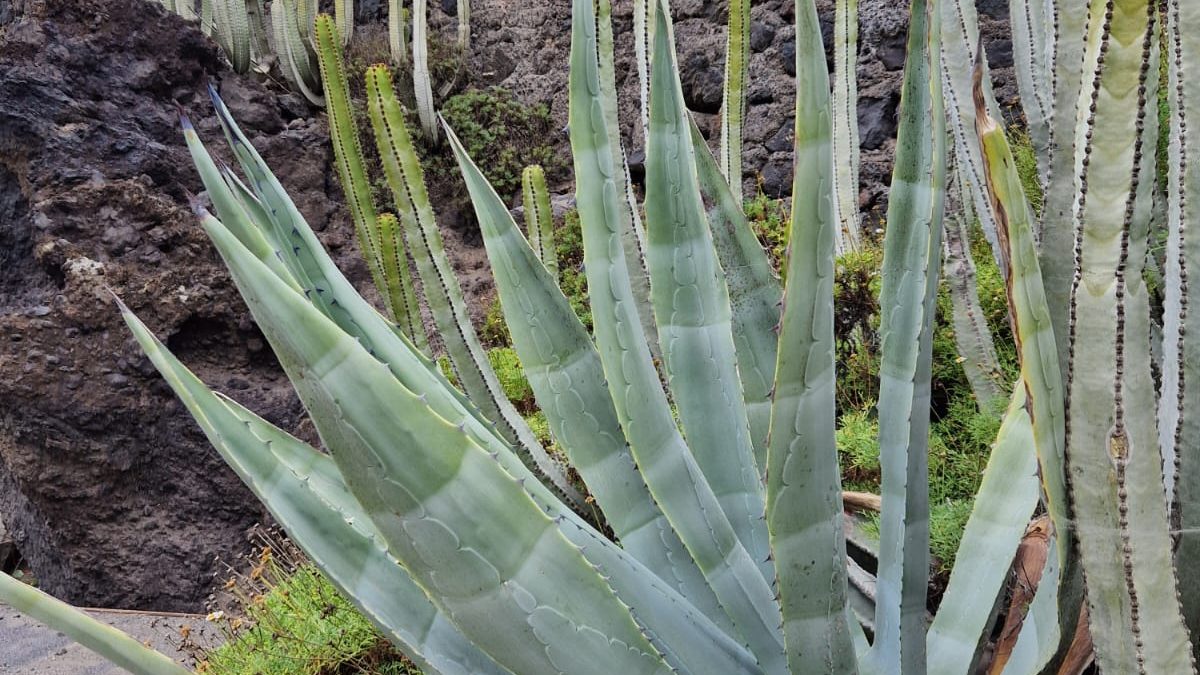
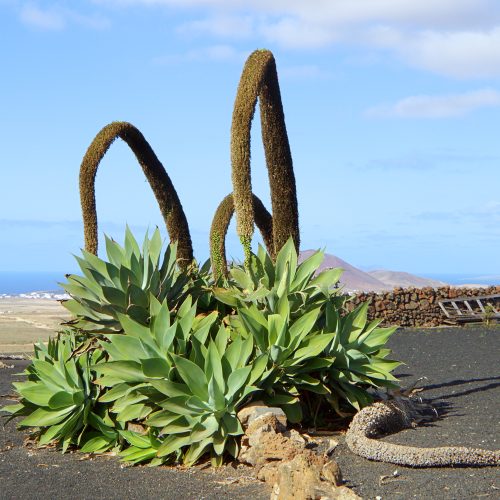
Agaves themselves are an introduced species from the Americas that have adapted so well to the arid coastal conditions here that they are widely naturalized across this island. They are monocarpic so nearly all of them only flower once and then die but when agaves flower you know about it. Not for nothing are such events known as the ‘Death Bloom’. To maximize their chances of reproductive success they channel all their accumulated energy and resources into a single, massive flowering and seed-production event, at the same time hoping to overwhelm local seed predators and herbivores, ensuring that a larger absolute number of seeds survive, and germinate. The flowering process completely exhausts the mother plant’s internal reserves, leaving it with no energy left to repair roots or rebuild leaves, but the seeds survive and the life cycle begins again. One such agave that was flowering during our visit was a.attenuata, also known as the fox tail agave

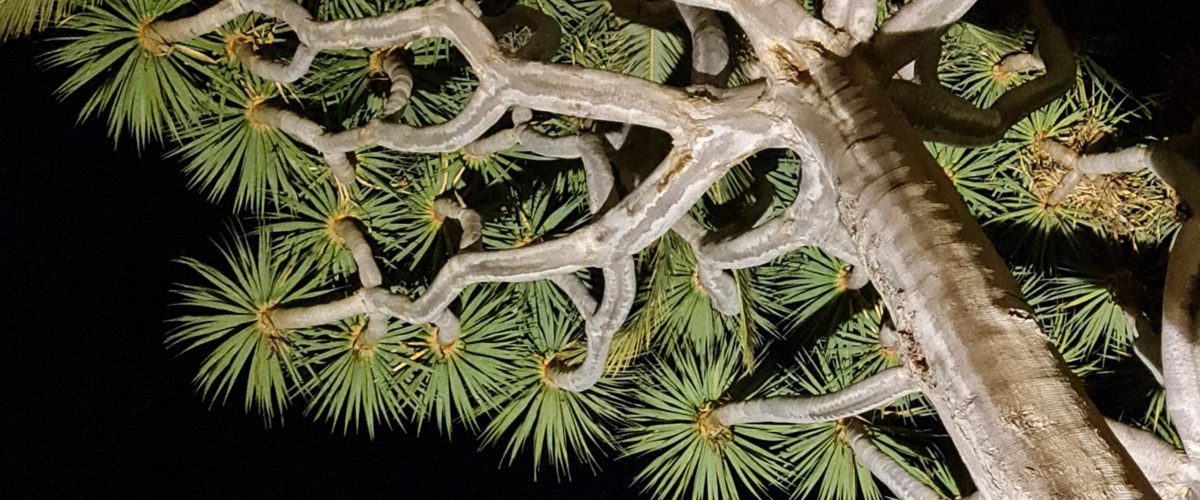
Back at the hotel is a very mature Dracaeno Draco, the dramatically named Dragon’s Blood Tree, on account of its red sap, which traditionally was used for staining wood and for relieving aches and pains. The branches of the very mature plants do resemble the twisting muscular torso of a Komodo dragon so the common name is very appropriate, all in all. It tolerates wind, salt spray and salty soils. Just not frost. A perfect tree for this isolated part of the world, which deserves closer inspection. I’ll be back.